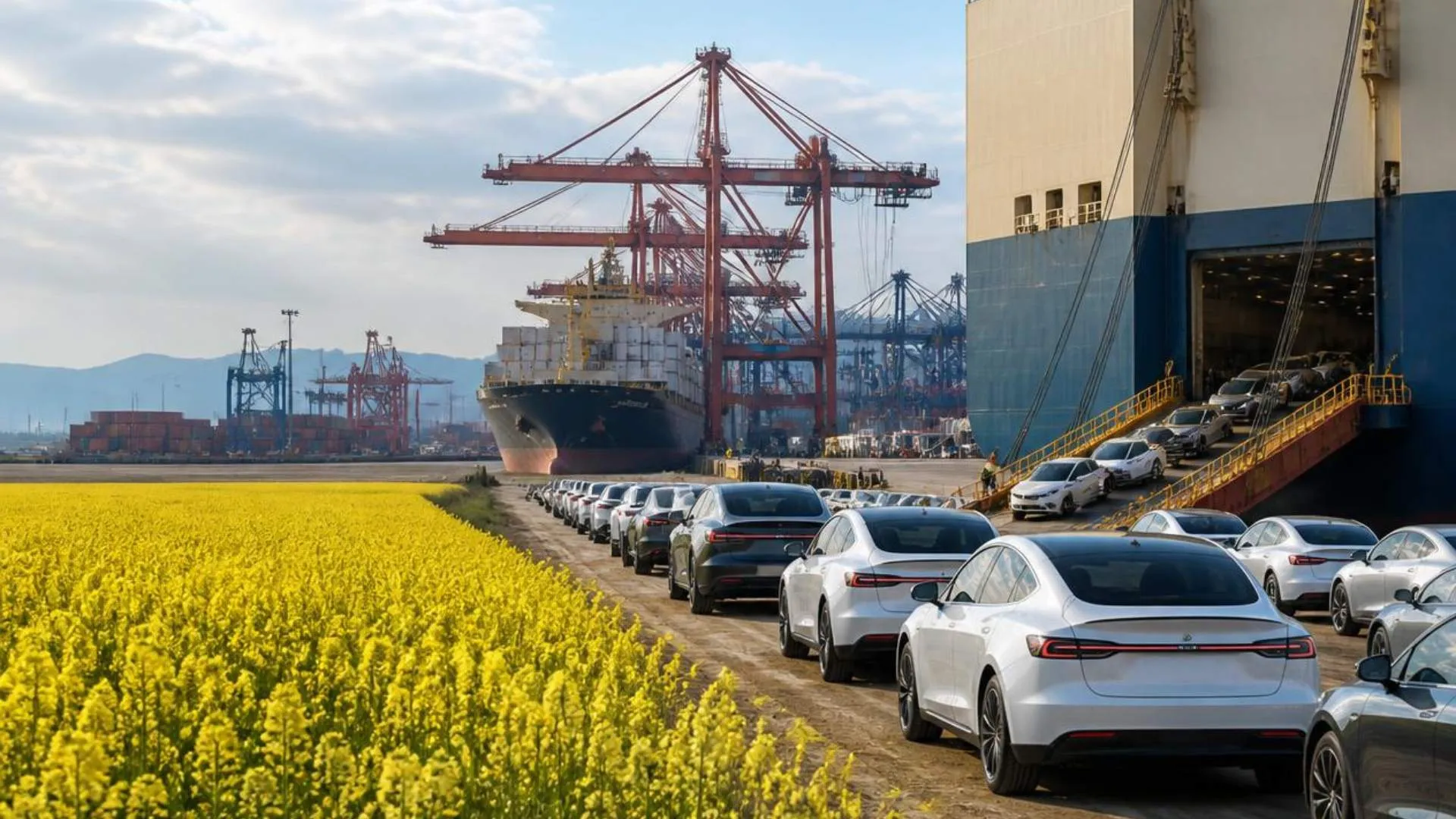

What Is the Canada China Canola EV Exchange?
The Canada China canola EV exchange refers to a trade arrangement where Canada allowed a limited annual quota of Chinese electric vehicles into the Canadian market, while China reduced or suspended some tariffs affecting Canadian agricultural and seafood exports.
It is not a literal swap of canola for cars. Instead, it is a tariff and market-access arrangement connected to wider Canada-China trade relations, agriculture, clean technology and electric vehicle policy.
Under the arrangement announced by the Prime Minister of Canada, Canada allowed up to 49,000 Chinese electric vehicles into the market at the 6.1% most-favoured-nation tariff rate. China was also expected to reduce tariffs on Canadian canola seed to around 15%, down from about 85%, and suspend certain anti-discrimination tariffs on canola meal, peas, lobster and crab until at least the end of 2026. Readers can review the official announcement through the Prime Minister of Canada’s Canada-China strategic partnership update.
Why Are Canola and Electric Vehicles Linked?
Canola and electric vehicles became linked because both were caught in a wider trade dispute between Canada and China.
Canada had previously imposed a high surtax on Chinese-made electric vehicles. China later applied major tariffs to Canadian agricultural products, including canola-related exports. Because canola is one of Canada’s most important agricultural commodities, the issue quickly became important for Canadian farmers, exporters and provincial economies.
For more background on the farming side of the issue, the Canola Council of Canada’s China update gives useful industry context on why China remains an important export market for Canadian canola.
The 2026 arrangement aimed to reduce pressure on both sides. Canada gave Chinese EV makers a controlled pathway into the Canadian market, while China reduced some trade barriers affecting Canadian canola and other exports.
| Topic | What Changed |
| Chinese EVs entering Canada | Canada created an annual quota of up to 49,000 Chinese EVs at a 6.1% tariff rate |
| Previous EV surtax | Vehicles inside the quota avoid the previous high surtax treatment |
| Canola seed | China was expected to reduce tariffs on Canadian canola seed to around 15% |
| Canola meal | China was expected to suspend some anti-discrimination tariffs until at least the end of 2026 |
| Other Canadian exports | Peas, lobster and crab were also included in temporary tariff relief |
| First EV impact | Lotus EVs were reported as the first visible Chinese-owned EV shipment under the arrangement |
| Main risk | The arrangement still depends on stable political, trade and regulatory cooperation |
What Changed for Canadian Canola?
The canola side of the exchange is one of the most important parts of the deal for Canadian agriculture.
Canadian canola farmers rely heavily on export markets. China has historically been one of the biggest buyers of Canadian canola seed, oil and meal. When tariffs rise, exporters can face lower demand, weaker prices and more uncertainty across the supply chain.
The new arrangement was designed to improve access for canola seed and reduce pressure on Canadian producers. This is especially important for farmers in Saskatchewan, Alberta and Manitoba, where canola is a major crop and an important contributor to rural income.
Businesses following broader export trends can also read more about Canadian agriculture exports to understand how trade access affects farmers, processors, ports, railways and commodity prices.
Does the Deal Remove All Canola Tariffs?
No. The arrangement improves access, but it does not mean every canola-related trade issue is permanently finished.
The most important confirmed benefit is lower tariff pressure on Canadian canola seed and temporary relief for canola meal. However, some related products may still face uncertainty depending on future trade discussions and China’s tariff decisions.
That is why the phrase “canola EV exchange” should be used carefully. It is more accurate to describe the arrangement as a partial trade reset covering specific electric vehicle, canola, seafood and agricultural tariff measures.
What Changed for Chinese EVs in Canada?
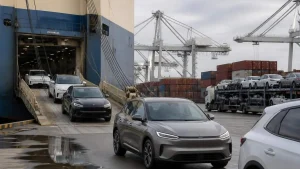
On the electric vehicle side, Canada created a quota that allows up to 49,000 Chinese EVs to enter the Canadian market at the 6.1% tariff rate.
This does not mean every Chinese EV brand can immediately sell cars in Canada. Vehicles still need to meet Canadian import, safety, certification, service and consumer protection requirements. Automakers also need dealer or distribution arrangements before consumers can easily buy and maintain the vehicles.
This change matters for Canada’s growing electric vehicle market because Chinese automakers are known for competitive pricing, battery technology and rapid EV production. If more brands enter Canada, buyers may eventually see more choice across SUV, sedan and affordable EV categories.
Which Chinese EVs Are Coming to Canada First?
The first major example is Lotus, which is owned by China’s Geely Holding Group.
Electrek reported that Canada was receiving fresh Lotus EVs under what it described as the first “canola-for-cars” deal, with Lotus Eletre models expected to arrive in Montreal. The report highlights how the trade arrangement is beginning to move from policy announcement to real vehicle imports. Readers can see the EV industry coverage in Electrek’s report on Lotus EVs arriving in Canada under the canola-for-cars deal.
However, Lotus is a premium EV brand. Its arrival does not automatically mean low-cost Chinese electric vehicles will immediately become available across Canada. The real consumer impact will depend on whether mass-market Chinese brands enter Canada and whether they build proper sales, warranty and servicing networks.
Will Chinese EVs Become Cheaper in Canada?
The deal could eventually increase EV competition and improve pricing pressure, but cheaper EVs are not guaranteed immediately.
If more Chinese brands enter Canada, buyers may see wider choice and potentially lower entry prices. This could matter for consumers who want an electric vehicle but find current prices too high.
However, final prices will still depend on import costs, tariffs, freight, dealer margins, safety certification, warranty support, battery specifications and local competition. Canadian buyers should also compare charging compatibility, parts availability, resale value and insurance costs before choosing any new EV brand.
For more practical buyer-focused updates, a related internal guide on EV prices in Canada would be a strong supporting article to link here.
Why Does This Matter for Canadian Farmers?
The deal matters because stable market access is essential for canola farmers.
When China places high tariffs on Canadian canola, farmers can be affected even if they do not export directly. Lower export demand can reduce prices offered by grain buyers, increase storage pressure and create uncertainty before planting decisions.
If China’s market remains open under improved tariff terms, Canadian canola producers may benefit from stronger demand and better confidence. But farmers should still remain cautious because agricultural trade can change quickly when political relations shift.
This is why the canola-EV arrangement is not just an auto story. It is also a major agriculture and rural economy story connected to Canada’s wider business and trade news.
Why Does This Matter for Canadian Businesses?

The Canada China canola EV exchange affects more than farmers and car buyers.
For Canadian businesses, the arrangement could influence agricultural exports, port activity, rail transport, auto retail, EV charging demand, battery supply chains and clean technology investment.
The Government of Canada has also connected the arrangement to wider cooperation in energy, clean technology, batteries, solar, wind and energy storage. This makes the deal relevant to companies following Canada’s clean technology sector as well as those watching agricultural exports.
If Chinese EV brands build stronger Canadian operations, there may also be opportunities for dealerships, parts suppliers, service centres, software providers and charging infrastructure companies.
What Are the Main Risks?
The arrangement has potential benefits, but it also carries risks.
The first risk is political. Canada’s position on Chinese EVs may not always align with the United States, especially because North American auto policy is closely connected through supply chains, investment and trade agreements.
The second risk is pressure on Canada’s domestic auto industry. If Chinese EVs enter the market without meaningful Canadian investment, critics may argue that the deal benefits importers more than Canadian workers.
The third risk is uncertainty for canola exporters. Some tariff relief may be temporary, and not every agricultural trade barrier may be permanently resolved. If relations deteriorate again, Canadian canola could become vulnerable to renewed restrictions.
Is This a Good Deal for Canada?
The answer depends on which sector is being considered.
For canola farmers and exporters, the deal may be positive if it restores more predictable access to China. For Canadian EV buyers, it could eventually mean more choice and possibly lower prices. For Canada’s auto sector, the value of the deal depends on whether Chinese EV access leads to real Canadian investment, jobs and supply-chain benefits.
The best way to understand the deal is as a trade reset, not a final solution. It reduces immediate pressure on Canadian agriculture and opens a controlled route for Chinese EV imports, but it also raises new questions about industrial policy, competition and long-term market access.
Timeline of the Canada China Canola EV Exchange
| Date | Event |
| 2024 | Canada increased pressure on Chinese-made EV imports through high tariff measures |
| 2025 | China applied major tariffs affecting Canadian canola and other exports |
| January 16, 2026 | Canada and China announced a new strategic partnership covering energy, agri-food and trade |
| March 1, 2026 | Canada’s EV quota and China’s canola tariff relief were expected to begin |
| July 2026 | Lotus EVs were reported as one of the first visible vehicle shipments linked to the arrangement |
What Should Canadians Watch Next?
Canadians should watch three things.
First, watch whether more Chinese EV brands complete the approval process and launch in Canada. Lotus may be the first visible sign, but mass-market brands would have a much larger consumer impact.
Second, watch whether China extends or makes permanent tariff relief for Canadian canola and other agricultural products. Temporary relief is helpful, but farmers and exporters need long-term certainty.
Third, watch whether Chinese EV access leads to real investment in Canada. If the arrangement results in battery partnerships, auto-sector jobs, parts manufacturing or clean technology investment, it may become more valuable for the Canadian economy.
Final Thoughts
The Canada China canola EV exchange is one of the clearest examples of how modern trade policy connects farming, clean technology, autos and diplomacy.
For Canada, the arrangement may reopen valuable agricultural access while giving consumers more EV options. For China, it provides a managed path into the Canadian EV market. For farmers, exporters, auto workers and buyers, the real impact will depend on whether early tariff changes turn into stable long-term trade.
The deal is promising, but it is not risk-free. The most important questions now are whether canola access remains open, whether affordable Chinese EVs reach Canadian buyers, and whether Canada secures meaningful investment in its domestic EV and auto supply chain.
FAQs About the Canada China Canola EV Exchange
What Is the Canada China Canola EV Exchange?
The Canada China canola EV exchange is a trade arrangement linking lower-tariff access for some Chinese electric vehicles in Canada with improved market access for Canadian canola and other exports in China.
Is Canada Literally Trading Canola for Electric Cars?
No. Canada is not directly swapping canola shipments for individual cars. The phrase refers to a broader tariff and quota arrangement involving canola market access and Chinese EV imports.
How Many Chinese EVs Can Enter Canada Under the Deal?
Canada announced a quota of up to 49,000 Chinese electric vehicles at the 6.1% most-favoured-nation tariff rate.
What Happened to China’s Tariffs on Canadian Canola?
China was expected to reduce tariffs on Canadian canola seed to around 15%, down from about 85%, and suspend some anti-discrimination tariffs on canola meal until at least the end of 2026.
Which EV Brand Arrived First Under the Deal?
Lotus, owned by China’s Geely Holding Group, was reported as one of the first Chinese-owned EV brands to send vehicles to Canada under the arrangement.
Will BYD Come to Canada?
BYD has been widely discussed as a possible future Chinese EV entrant in Canada, but any launch would depend on regulatory approval, business strategy, tariffs, service networks and market timing.
Will This Make EVs Cheaper in Canada?
It could help over time if more lower-priced Chinese EVs enter the market. However, early imports may be premium models, and final prices will depend on tariffs, shipping, certification, dealer networks and competition.
Is This Good for Canadian Canola Farmers?
It could be beneficial if it restores stronger access to China, one of Canada’s most important canola markets. However, farmers should still watch for future tariff changes and political risk.
Does the Deal Affect Canola Oil?
The arrangement is clearest for canola seed and canola meal. Canola oil may still face separate trade issues depending on future negotiations and tariff decisions.
Why Is This Deal Important for Canada-China Relations?
The deal is important because it connects agriculture, electric vehicles, clean technology and trade diversification. It shows that Canada and China are trying to rebuild parts of their economic relationship after several years of trade tension.