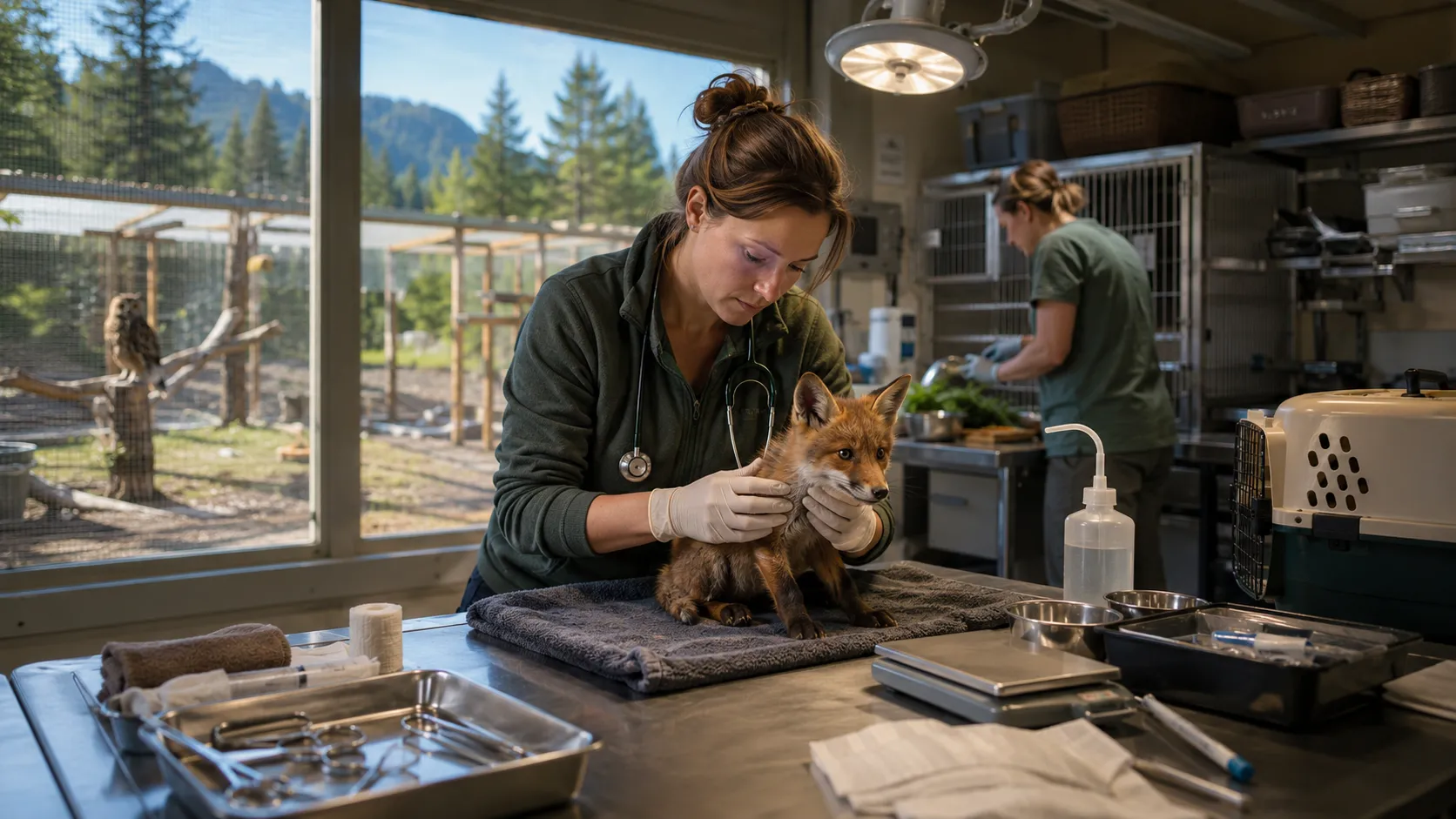

To become a wildlife rehabilitator in Canada, a person normally needs practical experience at an established wildlife rehabilitation centre, relevant animal-care training and the permits required by their province or territory.
There is no single Canada-wide licence covering every wild animal. Provincial and territorial governments regulate the possession and rehabilitation of most native wildlife, while the federal government regulates certain protected species, including migratory birds.
A university degree is not always mandatory. However, candidates must develop strong knowledge of animal husbandry, wildlife biology, disease prevention, nutrition, safe handling, emergency care and release assessment.
The most realistic route is to begin as a volunteer, learn from an authorized rehabilitator and apply for independent authorization only after developing sufficient experience.
What Does a Wildlife Rehabilitator Do?
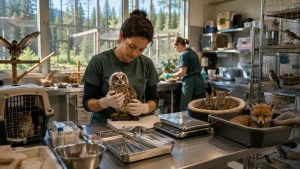
A wildlife rehabilitator provides temporary care to injured, sick, displaced or orphaned wild animals with the goal of returning them to their natural habitat.
The work is different from keeping wild animals as pets or caring for animals that cannot be released. Rehabilitation is intended to restore an animal’s health and natural behaviour while limiting unnecessary human contact.
Daily responsibilities may include:
- Examining newly admitted animals
- Identifying injuries or symptoms of disease
- Providing appropriate food and hydration
- Cleaning cages, enclosures and medical equipment
- Recording treatments, weight and recovery progress
- Administering care under veterinary direction
- Preventing disease transmission between animals and people
- Preparing animals for release
- Choosing suitable release locations
- Answering calls from members of the public
- Coordinating volunteers, veterinarians and transport teams
Wildlife rehabilitators may care for birds, squirrels, rabbits, raccoons, foxes, bats, reptiles or other native species, depending on the permissions attached to their authorization.
Is Wildlife Rehabilitation Regulated in Canada?
Yes. Wildlife rehabilitation is regulated because native wildlife cannot normally be captured, possessed or kept without legal authorization.
The exact requirements depend on the province or territory, the species involved and whether the person is working independently or under an existing rehabilitation centre.
The International Wildlife Rehabilitation Council’s guidance on becoming a rehabilitator explains that Canadian provinces have different rules depending on the species being treated and the work being performed.
For example, Saskatchewan states that a Wildlife Rehabilitation Licence is required to hold wildlife for rehabilitation. British Columbia advises that possessing live or dead wildlife without authorization is generally illegal. In Ontario, authorized rehabilitators are known as wildlife custodians.
A person should therefore contact the relevant provincial or territorial wildlife authority before capturing, transporting, treating or housing any wild animal.
What Are the Basic Requirements to Become a Wildlife Rehabilitator?
Requirements vary across Canada, but an applicant will commonly need to demonstrate several of the following:
| Requirement | What it may involve |
| Minimum age | The applicant may need to be an adult |
| Wildlife knowledge | Understanding local species, behaviour and natural history |
| Practical experience | Volunteering or working under an authorized rehabilitator |
| Suitable facility | Secure, hygienic and species-appropriate enclosures |
| Veterinary support | An established relationship with a licensed veterinarian |
| Training | Wildlife rehabilitation, animal care or veterinary-related courses |
| Examination | Some provinces require a wildlife rehabilitation examination |
| Records | Intake, treatment, transfer, death and release documentation |
| Inspection | The facility may need to pass a government inspection |
| Municipal compliance | Zoning, property-use and local by-law compliance |
| Species authorization | Additional approval for certain animals |
| Federal permits | Required for federally protected species such as migratory birds |
Meeting these requirements does not automatically guarantee approval. Wildlife authorities may evaluate the applicant’s competence, facility, veterinary arrangements and ability to provide humane care.
Is a University Degree Required?
A university degree is not universally required to become a wildlife rehabilitator in Canada.
Many rehabilitators enter the field through volunteering, mentorship and specialist wildlife rehabilitation courses. The BC SPCA notes that rehabilitators learn extensively through practical experience and that many begin as volunteers or summer students.
However, post-secondary education can improve a candidate’s knowledge and employment prospects. Useful programmes include:
- Wildlife biology
- Zoology
- Animal science
- Veterinary technology
- Environmental science
- Ecology
- Conservation biology
- Animal welfare
- Veterinary medicine
A degree in wildlife biology may be helpful for conservation or research positions, but it does not by itself authorize someone to possess and rehabilitate wildlife.
Similarly, completing a veterinary assistant or veterinary technician programme can provide valuable clinical skills, but the individual must still meet the applicable wildlife permit requirements.
How Can Someone Become a Wildlife Rehabilitator?
The pathway can be divided into several practical stages.
1. Research the Rules in the Province or Territory
The first step is to identify the government department responsible for wildlife rehabilitation in the applicant’s location.
The regulator may be a ministry responsible for natural resources, environment, fish and wildlife, forestry or conservation.
Questions to ask include:
- Is an examination required?
- Is a sponsor or mentor required?
- How much experience must the applicant have?
- Which species can be rehabilitated?
- Are separate authorizations required for rabies-vector species?
- Does the facility need to be inspected?
- What enclosure standards apply?
- Is a veterinarian required?
- Are annual reports mandatory?
- How often must the permit be renewed?
Applicants should obtain written guidance directly from the regulator rather than relying only on social media groups or informal advice.
2. Volunteer at an Authorized Wildlife Centre
Volunteering is usually the most valuable entry point into wildlife rehabilitation.
A volunteer may begin with basic responsibilities such as preparing food, washing equipment, cleaning enclosures, doing laundry or organizing supplies. As the person gains experience, the centre may provide supervised training in handling, feeding, record-keeping and animal assessment.
Volunteering helps an aspiring rehabilitator understand the realities of the occupation. The work can involve long shifts, unpleasant odours, animal waste, scratches, bites, emotional stress and difficult decisions about euthanasia.
It also provides an opportunity to build relationships with experienced rehabilitators who may later provide mentorship or professional references.
3. Complete Wildlife Rehabilitation Training
Although requirements differ, formal instruction can improve both competence and permit applications.
The International Wildlife Rehabilitation Council offers online and in-person education, including its Foundations of Wildlife Rehabilitation course. Training may cover:
- Intake and initial assessment
- Wildlife anatomy and physiology
- Handling and restraint
- Shock and stabilization
- Hydration and fluid therapy
- Wound management
- Nutrition
- Species-appropriate housing
- Zoonotic diseases
- Biosecurity
- Euthanasia considerations
- Release criteria
Candidates can also study the National Wildlife Rehabilitators Association’s educational materials and attend workshops offered by Canadian rehabilitation centres.
Courses are valuable, but they should complement supervised practical experience rather than replace it.
4. Gain Experience With Different Species
Wildlife care varies considerably between species.
A feeding method suitable for a young squirrel may be dangerous for a bird. An enclosure appropriate for a rabbit may not meet the behavioural or physical needs of a fox, raptor or waterfowl species.
Aspiring rehabilitators should develop knowledge of:
- Species identification
- Normal behaviour
- Natural diet
- Developmental stages
- Stress signals
- Handling risks
- Common injuries and diseases
- Housing requirements
- Migration and seasonal behaviour
- Release habitat
Some rehabilitators eventually specialize in a particular group, such as songbirds, raptors, small mammals, reptiles or rabies-vector species.
5. Establish a Relationship With a Veterinarian
Wildlife rehabilitators are not automatically authorized to practise veterinary medicine.
A licensed veterinarian may be needed to diagnose serious conditions, prescribe medication, conduct surgery, perform diagnostic testing or oversee euthanasia. Federal migratory bird rehabilitation permit applications may require a copy of a veterinarian’s current licence, along with evidence of the applicant’s skills and details of the facility.
Before applying for independent authorization, an applicant should speak with a veterinarian who is willing and able to assist with wildlife cases.
The arrangement should address:
- Emergency treatment
- Diagnostic tests
- Medication
- Surgery
- After-hours cases
- Euthanasia
- Medical records
- Treatment costs
- Disease reporting
Not every veterinary clinic has the facilities or experience needed to treat wildlife, so this relationship should be established well in advance.
6. Prepare a Suitable Rehabilitation Facility
An independent rehabilitator needs more than a spare room and several cages.
The facility must protect animal welfare, prevent escape and reduce disease transmission. It should also minimize habituation to humans and exposure to domestic animals.
Depending on the species, a rehabilitation facility may need:
- Intake and examination space
- Quarantine areas
- Indoor recovery enclosures
- Outdoor pre-release enclosures
- Food preparation and storage areas
- Handwashing facilities
- Secure medication storage
- Ventilation and temperature control
- Waste-management procedures
- Predator-proof construction
- Cleaning and disinfection equipment
- Separate areas for incompatible species
Municipal zoning and property rules may prevent a person from operating a rehabilitation facility at home. Noise, odour, waste, traffic and the number or type of animals kept on the property may all be regulated.
7. Pass Any Required Provincial Examination
Some provinces use examinations to assess an applicant’s understanding of wildlife care and legal obligations.
Ontario provides a clear example of this process. A prospective wildlife custodian must study for the Ontario Wildlife Rehabilitation Exam, pass the examination and then apply for a wildlife custodian authorization through the provincial government.
An examination may cover:
- Provincial wildlife legislation
- Species identification
- Animal handling
- Human safety
- Nutrition
- Housing
- Disease prevention
- Veterinary care
- Record-keeping
- Euthanasia
- Release standards
Passing an exam may only be one part of the process. The regulator may still need to approve the applicant, facility, veterinarian and requested species.
8. Apply for Provincial or Territorial Authorization
The applicant must submit the required forms and supporting information to the wildlife authority.
An application may request:
- Personal identification
- Training certificates
- Examination results
- Rehabilitation experience
- Mentor or sponsor details
- Veterinarian information
- Facility plans and photographs
- Enclosure measurements
- Species requested
- Biosecurity procedures
- Emergency plans
- References
- Municipal approvals
The regulator may inspect the facility before granting authorization. It may also restrict the applicant to specific species or impose conditions relating to record-keeping, transfers, treatment and release.
Is a Federal Permit Needed for Migratory Birds?
A provincial permit may not be enough to rehabilitate migratory birds.
Environment and Climate Change Canada issues a Scientific Rehabilitation Permit authorizing the temporary care, treatment and eventual release of injured, sick, oiled or displaced migratory birds.
The federal application may require evidence of appropriate skills or qualifications, veterinary support, facility information and applicable provincial or territorial authorization.
Members of the public cannot simply take an injured migratory bird home and rehabilitate it themselves. The federal government states that only holders of an appropriate Scientific Permit may take and rehabilitate an injured migratory bird.
Anyone interested in bird rehabilitation should review the Government of Canada’s scientific permit requirements before accepting birds.
Is Professional Wildlife Rehabilitation Certification Required?
Professional certification and legal authorization are not the same thing.
The Certified Wildlife Rehabilitator designation is a professional credential administered through the International Wildlife Rehabilitation Council. It demonstrates education, experience and professional knowledge, but it does not replace a provincial, territorial or federal permit.
The certification body explicitly states that completing the CWR designation is not equivalent to being licensed as a wildlife rehabilitator.
Certification can nevertheless strengthen professional credibility and demonstrate commitment to continuing education.
Current CWR requirements may include approved education, extensive wildlife rehabilitation experience and successful completion of the certification examination. Candidates should confirm the latest criteria through the Certified Wildlife Rehabilitator programme.
What Skills Does a Wildlife Rehabilitator Need?
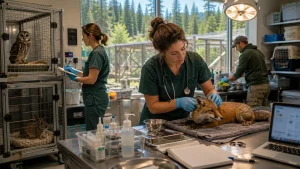
Successful rehabilitation requires much more than affection for animals.
Animal Observation
Wild animals often hide signs of weakness. Rehabilitators must notice small changes in posture, appetite, breathing, movement, droppings and behaviour.
Safe Handling
Wild animals may bite, scratch, kick or transmit disease. Proper restraint protects the animal, the handler and other people.
Emotional Resilience
Not every animal can be saved. Some arrive with severe trauma, advanced disease or permanent disabilities that prevent release.
The rehabilitator must be able to make humane, evidence-based decisions rather than allowing emotion to prolong suffering.
Record-Keeping
Accurate records are essential for treatment, government reporting and release decisions. Records may include the location where the animal was found, physical condition, weight, food intake, medication and outcome.
Time Management
Young or critically ill animals may require feeding, observation or treatment throughout the day and night. During spring and summer, centres can receive many new patients within a short period.
Communication
Rehabilitators regularly communicate with veterinarians, volunteers, conservation officers and members of the public. They must explain clearly when an animal needs help and when normal wildlife behaviour should not be disturbed.
Biosecurity
Wild animals can carry parasites, fungi, bacteria and viruses. Rehabilitators must understand quarantine, personal protective equipment, disinfection and zoonotic disease prevention.
Can Someone Work as a Wildlife Rehabilitator Without Having Their Own Facility?
Yes. A person does not necessarily need to open an independent rehabilitation centre.
Many people work or volunteer under the authorization of an established organization. Possible roles include:
- Wildlife care assistant
- Animal care technician
- Rehabilitation intern
- Intake coordinator
- Wildlife transport volunteer
- Education coordinator
- Volunteer supervisor
- Fundraising officer
- Centre administrator
Working at an established centre may be more practical than creating a home-based facility. The organization may already have permits, veterinary relationships, equipment, insurance, enclosures and experienced supervisors.
Whether an employee or volunteer is covered by the centre’s authorization depends on the applicable permit conditions. The organization should explain what activities the individual is legally allowed to perform.
How Much Does a Wildlife Rehabilitator Make in Canada?
Wildlife rehabilitator earnings vary considerably because there is no single occupational classification or standardized national salary for the profession.
Many entry-level opportunities are unpaid volunteer placements or seasonal internships. Paid positions are more likely at larger rehabilitation hospitals, conservation charities, humane organizations, veterinary facilities and government-supported centres.
| Career route | Possible compensation structure |
| Volunteer | Usually unpaid |
| Student or intern | Unpaid, honorarium or hourly wage |
| Wildlife care assistant | Hourly or seasonal wage |
| Veterinary assistant | Hourly wage |
| Veterinary technician | Higher pay where professional registration is required |
| Rehabilitation manager | Salary based on the organization’s funding and size |
| Independent centre operator | Income may depend on grants, donations and fundraising |
For comparison, Canada’s Job Bank currently reports a national median wage of approximately $23 per hour for veterinarian assistants. This is a related animal-care occupation rather than a wildlife-rehabilitator-specific salary, so actual rehabilitation wages may be lower or higher.
People entering the profession should not assume that wildlife rehabilitation will provide a high or predictable income. Many centres are charities operating with limited budgets and significant veterinary, food and facility costs.
How Much Does It Cost to Become a Wildlife Rehabilitator?
The cost depends on whether the person volunteers for an existing centre or applies to operate independently.
A volunteer may only need to pay for transportation, protective clothing and optional training. An independent rehabilitator may face much greater expenses, including:
- Training courses
- Permit applications
- Enclosure construction
- Heating and ventilation
- Food and supplements
- Cleaning supplies
- Veterinary treatment
- Diagnostic tests
- Medication
- Insurance
- Transportation
- Waste disposal
- Facility maintenance
- Emergency equipment
Wildlife rehabilitation is rarely funded by charging the person who finds an animal. Centres commonly rely on donations, fundraising, grants and community support.
Can a Wildlife Rehabilitation Centre Operate as a Business?
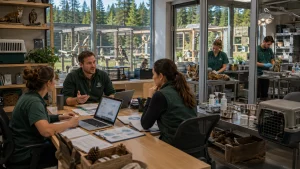
A rehabilitation centre may operate as a nonprofit organization, registered charity, society, corporation or another permitted structure.
The wildlife authorization and business structure are separate matters. Registering an organization does not provide permission to possess wildlife.
Anyone planning to open a centre should first confirm the wildlife permit requirements and then consider the wider steps involved in starting a business in Canada, including registration, taxation, municipal approval and financial planning.
A business or nonprofit organization may also need:
- Municipal business approval
- Zoning permission
- Public liability insurance
- Property insurance
- Employer registration
- Workers’ compensation coverage
- Payroll arrangements
- Charitable registration
- Donation-record procedures
- Volunteer policies
- Health and safety procedures
Ontario operators comparing potential protection can also review available insurance companies in Ontario, although wildlife facilities should speak directly with a commercial insurance broker about specialist coverage.
What Are the Main Challenges of Wildlife Rehabilitation?
Wildlife rehabilitation can be rewarding, but it is physically, financially and emotionally demanding.
Common challenges include:
- Long and irregular working hours
- Seasonal surges in admissions
- Limited funding
- High veterinary costs
- Risk of bites, scratches and disease exposure
- Difficult euthanasia decisions
- Public misunderstanding
- Volunteer recruitment and training
- Limited space
- Finding suitable release sites
- Preventing animals from becoming habituated to people
- Maintaining compliance with multiple regulators
Independent rehabilitators may also struggle to take holidays or leave the facility because animals require continuous care.
How Long Does It Take to Become a Wildlife Rehabilitator?
There is no standard national timeline.
A person may begin volunteering immediately after completing the centre’s orientation and safety requirements. Becoming sufficiently experienced to apply for independent authorization may take several months or several years.
The timeline depends on:
- Provincial or territorial requirements
- Required examinations
- Availability of volunteer positions
- Number of practical hours completed
- Species specialization
- Facility preparation
- Veterinary arrangements
- Permit-processing times
- Inspection outcomes
- Federal permit requirements
An aspiring rehabilitator should focus on developing competence rather than trying to obtain authorization as quickly as possible.
How Can Someone Find Wildlife Rehabilitation Experience?
Prospective volunteers can search for:
- Provincial wildlife rehabilitator directories
- Wildlife hospitals
- Bird rescue centres
- Humane societies with wildlife programmes
- Conservation organizations
- Veterinary clinics treating wildlife
- University wildlife programmes
- Seasonal animal-care internships
For example, Ontario provides a directory of authorized wildlife rehabilitators, while British Columbia directs the public to accredited rescue and rehabilitation centres.
When contacting a centre, the applicant should explain their availability, transportation, relevant education and willingness to perform cleaning and support tasks. Centres may not allow new volunteers to handle animals immediately.
Is Wildlife Rehabilitation the Same as Wildlife Rescue?
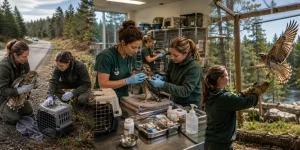
Wildlife rescue and wildlife rehabilitation are connected but different.
Rescue generally involves safely removing an animal from immediate danger and transporting it to an authorized professional. Rehabilitation involves assessing, treating, housing and preparing the animal for release.
A rescue volunteer may not be legally authorized to keep or treat an animal independently.
Similarly, wildlife rehabilitation is different from:
- Pest control
- Wildlife relocation
- Domestic animal rescue
- Veterinary practice
- Zoo animal care
- Wildlife research
- Conservation enforcement
Each activity may have separate training and legal requirements.
What Should Someone Do After Finding an Injured Wild Animal?
A member of the public should not automatically capture or feed the animal.
Some animals that appear abandoned are healthy juveniles whose parents are nearby. Capturing them unnecessarily can cause stress and reduce their chance of survival.
The person should:
- Observe the animal from a safe distance.
- Keep children and pets away.
- Record the location.
- Take photographs where it is safe to do so.
- Contact an authorized wildlife rehabilitator.
- Follow the rehabilitator’s handling and transportation instructions.
Wild animals should not be given food, water or medication unless a qualified professional provides specific instructions.
Is Becoming a Wildlife Rehabilitator a Good Career?
Wildlife rehabilitation may be suitable for someone who is committed to animal welfare, conservation and practical care.
The work offers the opportunity to help injured animals return to the wild, educate communities and contribute to wildlife health monitoring. It can also provide experience for careers in veterinary medicine, animal care, conservation and wildlife biology.
However, it is not an easy career. Paid jobs can be limited, the work is physically demanding and animal outcomes are not always positive.
The profession is best suited to someone who can follow strict protocols, make evidence-based decisions, perform repetitive cleaning tasks and remain compassionate without treating wildlife as pets.
Final Thoughts
Learning how to become a wildlife rehabilitator begins with understanding that compassion alone is not enough. The profession requires legal authorization, scientific knowledge, practical animal-care skills, suitable facilities and the ability to make difficult welfare decisions.
Most successful candidates begin by volunteering with an established centre. This allows them to learn safe handling, feeding, sanitation, biosecurity, record-keeping and release procedures under experienced supervision.
After gaining practical experience, they can complete specialist training, establish veterinary support and apply for the provincial, territorial and federal permits relevant to the species they intend to treat.
Wildlife rehabilitation can be demanding and is not always highly paid, but it offers a meaningful career path for people committed to helping wild animals recover and return safely to their natural environment.
Permit rules, certification requirements and organizational policies can change. This article was reviewed in July 2026. Applicants should verify current requirements with their provincial or territorial wildlife authority and the Government of Canada before handling or housing wildlife.
Frequently Asked Questions
Can anyone become a wildlife rehabilitator?
A person can begin learning through volunteering, but independent rehabilitation usually requires government authorization, suitable facilities, experience and species-specific knowledge.
Do wildlife rehabilitators need a degree?
A degree is not universally required. However, wildlife biology, veterinary technology, zoology, animal science and related education can improve knowledge and employment prospects.
Do wildlife rehabilitators need a licence in Canada?
Most wildlife rehabilitation activities require provincial or territorial authorization. Additional federal permits may be required for migratory birds and other federally regulated species.
Can a person rehabilitate wildlife from home?
It may be possible in some jurisdictions, but only with the necessary authorization, suitable facilities, veterinary support and municipal approval. A normal pet cage in a residential room is not sufficient.
Can someone keep an animal that cannot be released?
Wildlife rehabilitation permits are generally intended for temporary care followed by release. An unreleasable animal cannot automatically be kept as a pet. The regulator decides what outcomes are legally permitted.
Is the Certified Wildlife Rehabilitator designation a licence?
No. CWR is a professional certification. It does not replace provincial, territorial or federal wildlife authorization.
Can a wildlife rehabilitator work with migratory birds?
Only when the necessary federal and applicable provincial or territorial permits are in place.
Are wildlife rehabilitation jobs paid?
Some positions are paid, but many opportunities begin as volunteering, internships or seasonal work. Compensation depends heavily on the centre’s size, funding and position.
Can international students become wildlife rehabilitators in Canada?
International students may be able to study or volunteer where immigration conditions and organizational policies permit. Paid employment requires valid work authorization, while independent wildlife rehabilitation still requires the applicable permits.
What is the best first step?
The best first step is to contact an authorized wildlife rehabilitation centre and ask about volunteering, training and the permit requirements in the relevant province or territory.